


By Hugo Silva
Digital marketing used to feel like a game only big companies could afford to play. Today, small businesses have a real advantage, especially with AI in the mix. Smart tools can cut costs, speed up work, and help you make decisions with far more confidence than guesswork ever could.
In this guide, we’ll break down the core pieces of a strong digital presence: SEO and local search, content that builds trust, email that nurtures buyers, social media for local visibility, online ads that don’t drain your budget, and the tech stack that keeps everything running smoothly.
You’ll see how to build a practical plan, understand your numbers, and take the right steps to grow your business and your brand — all with AI as your new superpower!
Introduction – Digital Marketing 101
Digital marketing lets small businesses compete by appearing when customers search, compare, and review online—through clarity, consistency, and relevance.
Key Takeaways
- Visibility wins customers – Small businesses can compete with bigger brands by showing up consistently where customers search, compare, and decide online.
- AI levels the playing field – Marketing tasks that took hours now take minutes, giving small teams the power to stay professional and consistent without large budgets.
- Start, measure, adapt – You don't need a perfect plan from day one. Understanding each channel's role, then testing and adjusting based on results, is how you find what works.
Digital marketing has become one of the most important tools for small businesses. Customers don’t just walk in the door (or your website) anymore. They search, compare, read reviews, and check social media before deciding who to buy from. If your business isn’t showing up in those moments, you’re leaving opportunities on the table. The good news is that small businesses can compete with bigger brands when they show up online with clarity, consistency and relevance.
AI is also changing the game in a way that benefits small teams. Tasks that used to take hours—writing content, researching competitors, organizing ideas, reviewing analytics—can now be done in minutes. You don’t need a big marketing department to look professional or stay consistent. AI won’t magically replace strategy or creativity, but it can take a lot of weight off your shoulders and help you move faster. For many small businesses, it becomes a genuine superpower.
Before you jump into building a full marketing plan, it helps to understand what each channel does. SEO, email, social media, content, online ads, and automation all play different roles in attracting and converting customers. When you understand the strengths of each channel, planning stops feeling overwhelming. You’re making informed choices about where to focus your time and budget because in a small business these two are not that abundant.
Digital marketing is always shifting, and that’s something every business—large or small—has to work with. Algorithms change. Platforms evolve. Customer habits move quickly. That’s why a strategy is important, but it’s even more important to start, measure what happens, and adjust along the way. You don’t need to get everything right on day one. You just need to begin, track your results, and learn what works for your market.
This guide will walk you through the main digital channels one by one, help you understand how they fit together, and give you the clarity to build a plan that matches your reality as a small business. By the end, you’ll know exactly where to put your energy next.


Learn more from our blog
AI tools, new buying habits, and cross-platform journeys are rewriting how people shop online.

AI in Digital Marketing
Small businesses don't need bigger teams, they need smarter tools. AI handles the repetitive work so you can focus on building your brand and connecting with your customers.
Key Takeaways
- AI speeds up your work, not the strategy – Use AI to handle repetitive tasks like drafting content, analyzing data, and testing variations, but keep your judgment, direction, and brand personality at the center.
- Small businesses gain big-team capabilities – AI gives you the kind of support that used to require hiring more people, letting you create faster and explore more without burning hours on busywork.
- AI is infrastructure, not a trend – It's baked into search, social, ads, and email platforms. Businesses that thrive will be the ones using it smartly while staying authentic and customer-focused.
Small businesses often feel stretched when it comes to marketing. There’s always something to create, analyze, or plan, and never enough hours in the day to handle it all. Tasks that should feel creative end up feeling like chores. By the time you finish writing content, keeping up with your socials, reviewing your ads, and trying to understand what’s actually working, the week is already gone. That constant pressure makes it easy to fall behind or to put marketing on pause “just for now.”
This is exactly where AI can help. It gives small businesses the kind of support that used to require a bigger team. You can create content faster, explore new ideas, test ad variations, and review your performance without spending whole afternoons on it. Instead of staring at a blank page or digging through dashboards, you get a running start. You can outline a blog, draft an email, rewrite a product description, or analyze a competitor in minutes. AI speeds up the work that normally slows you down, so you can focus your energy on the parts that actually move the needle.
Even though AI can do a lot, it doesn’t replace strategy or intuition. It won’t know your customers the way you do, and it can’t tell you what your business should stand for. Think of it as a creative and analytical partner, not a decision-maker. You bring the direction, the judgment, and the personality. AI brings efficiency, consistency, and the freedom to do more with the time you have.
As AI becomes part of every tool—search engines, social platforms, ad systems, email providers—it’s clear that this isn’t a temporary trend. It’s becoming the foundation of how businesses communicate and compete. The small businesses that will thrive are the ones that use AI to work smarter while keeping their brand honest and grounded. Strong values, a clear voice, and genuine relationships with customers will matter more than ever.
Using AI isn’t about replacing your work. It’s about removing the friction so you can deliver your best ideas with less effort. When you mix smart tools with a strong identity, you build marketing that’s faster, more focused, and ready for the future. AI is a small business superpower.

Learn more from our blog
AI tools, new buying habits, and cross-platform journeys are rewriting how people shop online.
SEO and AI Search Optimization (or GEO)
The way people search is changing—and small businesses have an advantage. AI engines like ChatGPT and Perplexity answer questions directly. Your goal now is GEO: being the business they reference and recommend.
Key Takeaways
- Create content only you can produce – Build around real experiences and firsthand expertise that big brands can't replicate. AI rewards originality!
- AI search traffic rose 740% in 12 months – Customers get answers from generative engines now. Show up where they're looking.
- Clarity and depth beat company size – Strong pages, helpful guides, and authentic stories build authority in traditional and AI search.
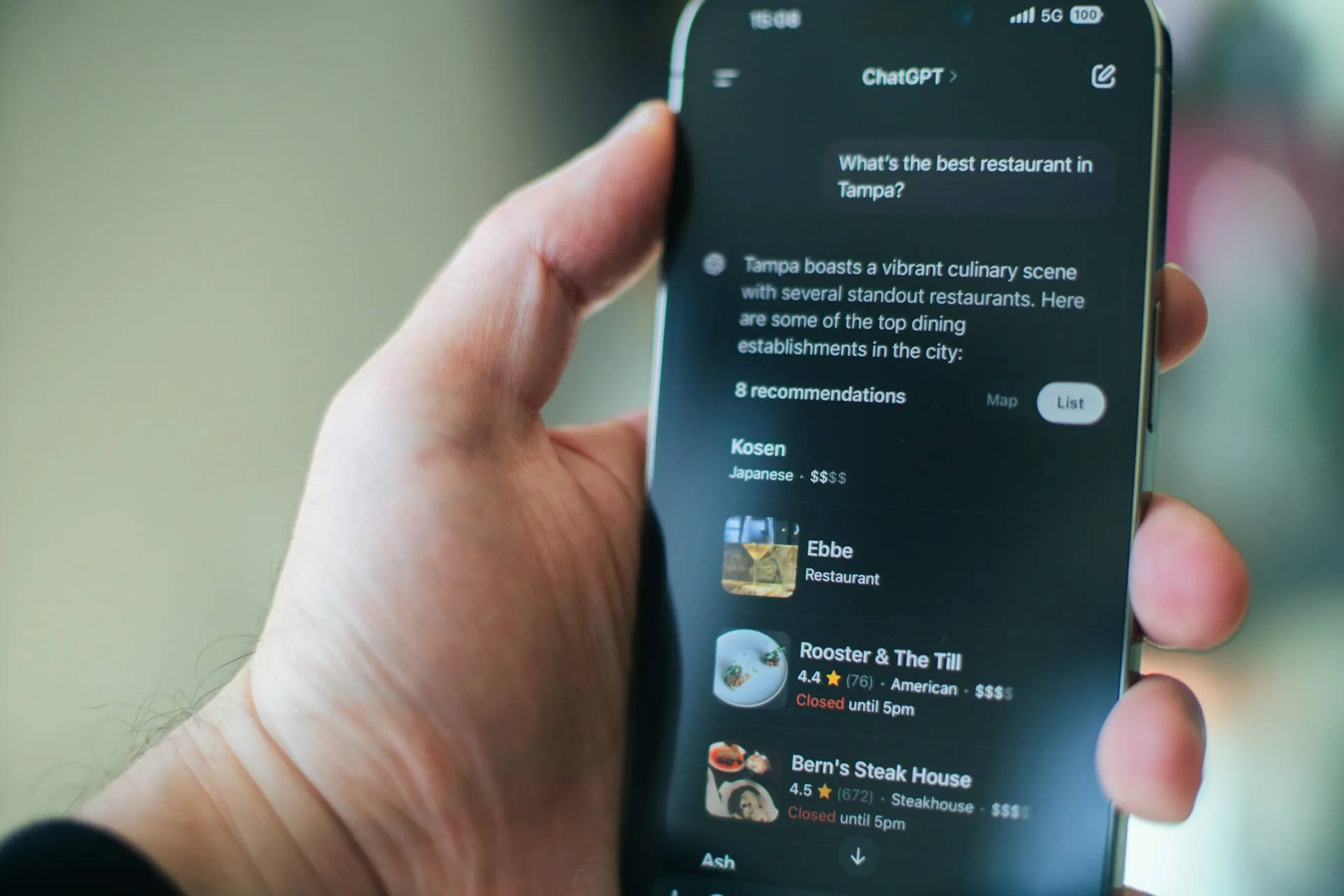
For most small businesses, SEO must not be about climbing Google’s rankings anymore. The landscape is shifting toward AI-powered search experiences, where customers get answers directly from generative engines like ChatGPT, Perplexity, Gemini, and the new AI layers inside traditional search (total AI search traffic rose by **740%** in just 12 months). This is where GEO — Generative Engine Optimization — comes in. It’s the opportunity to position your business so these AI systems reference, summarize, or recommend you when users ask questions related to your products or expertise. For small businesses, this is a brand-new lane to stand out before bigger competitors even notice it.
The secret is to build your own Blue Ocean within search. Instead of fighting for the same keyword scraps as everyone else, you create content that only your business can produce: real experiences, detailed explanations, firsthand examples, behind-the-scenes insights, and the kind of specificity big brands can’t match. AI engines thrive on fresh, unique, trustworthy and clearly written information. When your content reflects your personality, your craft, and your real customer care, it becomes exactly the kind of signal these systems look for when generating answers.
This applies whether you sell locally, nationally, or globally. Search engines and AI models reward clarity and depth, not size. Strong service pages, helpful guides, authentic stories, and consistent reviews all build authority in both traditional search and generative engines. A single high-quality page can “teach” AI systems who you are and why you matter in your niche — something generic content can’t do.
AI also accelerates your work. You can analyze competitors faster, uncover long-tail opportunities, structure your pages more effectively, and generate outlines that help you move from idea to finished content in a fraction of the time. Just remember that AI can support the process, but it’s your originality that earns visibility. It can’t fabricate the edge that makes your business worth mentioning.
Small businesses win in this new environment by being unmistakably themselves and making that uniqueness easy for search engines — and now generative engines — to understand. When you pair genuine expertise with AI-powered efficiency, you create a search presence that attracts the right customers and positions your brand inside the very tools they’re beginning to trust most.

Learn more from our blog
AI tools, new buying habits, and cross-platform journeys are rewriting how people shop online.
Local SEO for Small Businesses
Local SEO is one of the highest-impact moves a small business can make, especially when your customers are searching with intent.
Key Takeaways
- A complete and active Google Business Profile is often the deciding factor in local search visibility.
- Clear service pages with natural regional references help Google and customers understand exactly what you offer and will improve conversions.
- Responding to reviews builds trust, strengthens your brand voice, and signals credibility to both users and search engines (an AI engines).
Local SEO is one of the highest-impact moves a small business can make, especially when your customers are searching with intent. When someone looks for a service “near me” or adds a city or region to their search, they’re usually ready to choose. This is where your visibility on Google can directly turn into phone calls, bookings, and foot traffic.
Your Google Business Profile sits at the center of this. An optimized profile with accurate contact details, clear service descriptions, updated photos, and regular posts helps Google understand who you are and when to show you. Just as important is engagement. Responding to reviews — both positive and negative — shows potential customers that you care and shows Google that your business is active and trustworthy. Those responses are part of your brand voice, and they matter more than most businesses realize.
On your website, structure makes all the difference. Each core service should have its own clear, well-written page that explains what you do, who it’s for, and how it solves a real problem. Referencing your region naturally throughout your site helps search engines connect your business to the areas you serve. This doesn’t mean stuffing city names everywhere. It means being specific and honest about where and how you operate.
Local SEO isn’t about gaming the system. It’s about removing doubt. Clear service pages, consistent regional signals, and real customer feedback all work together to build confidence. AI can help you spot gaps, improve page structure, and draft responses faster, but your tone and attention to detail are what make the difference.
When local SEO is done right, it creates a steady flow of high-intent traffic. You’re not chasing attention. You’re showing up exactly when someone nearby is ready to make a decision — and that’s one of the strongest positions a small business can be in.
Learn more from our blog
AI tools, new buying habits, and cross-platform journeys are rewriting how people shop online.
Content Marketing
People want to know who they're buying from. Content marketing lets small businesses share their story, personality, and values in ways big brands can't match.
Key Takeaways
- Your story is your advantage – Share how you started, what you've learned, and what you're building—no competitor can copy that.
- Real beats polished – Workspace videos, event photos, and behind-the-scenes moments make you memorable and trustworthy.
- Mix text, video, and images, and (more importantly) stay consistent – Video shows personality, images show standards, stories show heart. Keep tone and look consistent across all of it.
Content marketing is where a small business can finally tell its story in a way that bigger brands simply can’t. People want to know who they’re buying from. They want to feel the personality behind the product, the hands behind the craft, the intentions behind the service. When you share how your business started, what you struggled with, what you’re proud of, and what you’re building toward, you’re not oversharing — you’re giving customers a reason to care. That story becomes part of your brand, and no competitor can copy it.
Your content doesn’t need to be polished like a national campaign to be effective. It just needs to be real. A video shot in your workspace, a photo of you at an event, a short post explaining a tough lesson you learned, or a behind-the-scenes look at how you do what you do — these moments make your business memorable. When your visuals and voice feel like you, people naturally trust you more.
Text still matters, especially for search, but it isn’t the whole picture. Video helps customers see your personality. Images help them see your standards. Stories help them see your heart. When all of this stays on brand — consistent tone, consistent look, consistent message — your content becomes a bridge between what you do and how people experience it.
AI helps you organize ideas, refine your message, and turn rough thoughts into something clear and engaging. It can turn one story into a blog post, a video script, an email, and a social caption. But the raw material has to come from you. Your journey, your insights, your way of doing things — that’s the gold. AI just helps you shape it.
The small businesses that win with content marketing are the ones that show up as themselves. Not perfect. Not corporate. Just honest, helpful, and human. When your content carries that feeling, people don’t just notice your business — they root for it.
Learn more from our blog
AI tools, new buying habits, and cross-platform journeys are rewriting how people shop online.
Email Marketing
Email is a direct line to people who chose to hear from you. No algorithm, no middleman, just you and your audience. For small businesses, especially in B2B, it's one of the highest-ROI channels available.
Key Takeaways
- Email delivers unmatched ROI – Email generates $36–$42 for every $1 spent—outperforming social ads, content marketing, and most other channels.
- You don't need a huge list, just the right people – Simple, personal emails that share updates, stories, or offers work. In B2B, email often becomes your sales pipeline.
- You own the connection – No platform controls who sees your message. Subscribers gave you direct inbox access—that's rare and valuable.
Email marketing doesn’t always get the spotlight, but it’s still one of the most powerful channels a small business can use — especially if you work in B2B. When someone signs up for your newsletter, they’ve given you direct access to their inbox. No algorithm. No middleman. No hoping the right people see your post. It’s a straight line from your business to a real person who chose to hear from you. In a world where attention is scattered across platforms, that kind of connection is rare.
And the numbers back it up. Email consistently delivers the strongest return on investment of any digital marketing channel. Industry benchmarks show email generating roughly $36–$42 for every $1 spent. SEO ranges from 317% to nearly 1,400% depending on the niche. Social ads hover around 250%. Content marketing averages $2.77 for each dollar invested. They’re all valuable, but email stands in a category of its own when it comes to predictable, repeatable results.
For small businesses, this is a huge advantage. You don’t need a massive list. You just need the right people on it. Your emails can be simple, personal, and straight to the point — sharing updates, telling stories, educating your audience, or making offers at the right time. If you’re in B2B, email often becomes the backbone of your sales pipeline. It nurtures leads, builds trust, and keeps your brand top of mind long after the first interaction.
AI can make the whole process smoother. It can help you plan your sequences, refine subject lines, draft newsletters, and repurpose your best content into bite-sized emails. But the heartbeat of email marketing is your voice. People read emails that feel human. They respond to stories that feel real. They act when they trust you.
If you treat your subscribers like an asset — not just a channel — email becomes one of the most reliable ways to grow your brand and your small business. It’s premium real estate in the digital world, and when you use it well, it pays you back over and over again.


Learn more from our blog
AI tools, new buying habits, and cross-platform journeys are rewriting how people shop online.
Social Media Marketing
Social media is where people discover you before they know they need you. It's the spark that puts your brand in front of audiences who aren't searching yet, building familiarity long before they're ready to buy.
Key Takeaways
- Social reaches people before they search – It catches attention early. Once they're ready to decide, SEO and your website take over. Social is discovery; search is follow-through.
- Organic growth is harder but still possible – Strong hooks, short videos, carousels, and behind-the-scenes posts still travel when they're honest and helpful. Personality and consistency beat perfection.
- Familiarity builds trust over time – Show your process, share lessons, and let people see who you are. Trust forms before the first purchase.
Social media is often where people discover you for the first time. Before they visit your website, before they compare options, before they even realize they have a specific problem to solve, they meet your brand on Facebook, Instagram, TikTok, or — if you’re in B2B — LinkedIn. These platforms put your business in front of people who aren’t actively searching yet. In that early discovery stage, attention is everything, and social media gives you a way to earn it without paying for every impression. In many ways, it’s still “free” advertising.
That said, growing on social media has become tougher. Organic reach is lower, trends are faster, and every feed is crowded. But growth is absolutely still possible. Strong hooks, clear storytelling, and formats like short video, carousels, behind-the-scenes posts, and quick tips can still travel far when they feel honest and helpful. Social media rewards personality and consistency, not perfection. Show your process. Share your lessons. Let people see who you are. Familiarity builds trust long before someone is ready to buy.
And here’s the key distinction: social media reaches people who aren’t yet searching. Once they *are* searching, they’re deeper in the decision stage. At that point, SEO, GEO, and your website do the heavy lifting. Social is the spark; search is the follow-through. When these two channels work together, you guide people from discovery to decision with less friction.
AI can help you brainstorm hooks, repurpose long content into bite-sized posts, refine captions, or analyze what performs well. But the heart of your social presence still comes from you — your voice, your story, your day-to-day reality as a small business.
Social media won’t replace your other channels, but it makes every other channel work better. The more people see you and get used to your presence, the easier it becomes for them to choose you when they’re finally ready to take action.
Learn more from our blog
AI tools, new buying habits, and cross-platform journeys are rewriting how people shop online.
Online Advertising
Online advertising is one of the fastest ways for a small business to get visibility, test ideas, and generate leads. Platforms like Google Ads and Meta Ads (Facebook and Instagram) are the obvious starting points.
Key Takeaways
- Online ads work best when you choose platforms based on where your audience actually is, not what’s trending.
- Tracking CPC, CPA, ROAS, and ROI turns advertising from guesswork into a controlled growth lever.
- Small budgets can still be profitable when campaigns are simple, focused, and constantly optimized.
Online advertising is one of the fastest ways for a small business to get visibility, test ideas, and generate leads. Platforms like Google Ads and Meta Ads (Facebook and Instagram) are the obvious starting points, but they’re not the only options. LinkedIn Ads can be extremely effective for B2B, especially when you’re targeting decision-makers by role or industry. TikTok Ads can work surprisingly well for certain niches where attention and creativity matter more than polish. The right platform depends on where your audience already spends their time.
What makes online advertising powerful is control. You decide who sees your ads, when they see them, and how much you’re willing to spend. But that control only matters if you track the right numbers. Cost per click (CPC) tells you how expensive it is to attract attention. Cost per acquisition (CPA) shows what you’re paying to turn that attention into a lead or sale. Return on ad spend (ROAS) helps you understand how much revenue you’re generating for every dollar spent. And ROI brings it all together, answering the most important question: is this actually making money for your business?
For small businesses, ads shouldn’t feel like gambling. You don’t need massive budgets to get results, but you do need clarity. Start with simple campaigns, test one message at a time, and let the data guide your decisions. AI can help you generate ad variations, test headlines, and analyze performance faster, but profitability still comes down to fundamentals: clear offers, strong landing pages, and realistic expectations.
Online advertising works best when it supports your wider strategy. It can amplify what’s already working in SEO, content, and email, and help you reach people at the exact moment they’re ready to act. When you monitor the right metrics and adjust quickly, ads become a predictable growth lever instead of a money drain.
Learn more from our blog
AI tools, new buying habits, and cross-platform journeys are rewriting how people shop online.
Building and Budgeting a Digital Marketing Plan
A digital marketing plan doesn’t need to be complex to be effective. In fact, for most small businesses, simpler is better. When a plan is clear, it becomes a tool you actually use, not a file that collects dust.
Key Takeaways
- Clear business goals should drive every marketing decision and budget choice.
- Fewer channels, chosen intentionally, outperform scattered efforts across many platforms.
- A simple plan that evolves over time works better than an overcomplicated strategy from day one.
A digital marketing plan doesn’t need to be complex to be effective. In fact, for most small businesses, simpler is better. The goal isn’t to document everything you could do. It’s to decide what you will do, why you’re doing it, and how you’ll measure success. When a plan is clear, it becomes a tool you actually use, not a file that collects dust.
Start with goals that connect directly to the business. More leads. More bookings. Higher average order value. Better brand recognition in a specific market. If a channel or tactic doesn’t support one of those goals, it doesn’t belong in the plan. This is where many small businesses go wrong. They spread themselves thin instead of focusing on the few activities that can realistically move the needle.
Next comes channel selection. SEO, content, email, social media, ads — you don’t need all of them at once. Choose based on your audience, your sales cycle, and your capacity. Then build a simple roadmap: what you’ll work on first, what comes next, and what can wait. A rough timeline is enough. You’re creating direction, not a prison.
Budgeting should follow the same logic. Start with what you can afford to invest consistently, not what sounds impressive. Allocate more budget to channels that are measurable and closer to revenue, and leave room to test and adjust. AI can help forecast scenarios, track performance, and highlight inefficiencies, but alignment still matters more than precision.
The best plans evolve. Start small, learn fast, and add detail as you gain clarity. When your strategy stays tied to real business goals, digital marketing stops feeling overwhelming and starts feeling intentional.
Learn more from our blog
AI tools, new buying habits, and cross-platform journeys are rewriting how people shop online.