


8.5 billion Google searches happen every day. That is 100,000 queries every second. But the way those searches work, and what it takes to show up in them, has shifted more in the last two years than in the previous ten. AI Overviews now answer questions before anyone clicks a link. Video results compete directly with text pages. And the businesses that understood SEO five years ago are now having to learn it again.
What Does SEO Actually Do for a Small Business?
SEO, or Search Engine Optimization, is the process of making your website appear in search results when potential customers are looking for what you sell. When it works, it sends you a steady stream of people who already want what you offer, without paying for every click the way you do with ads.
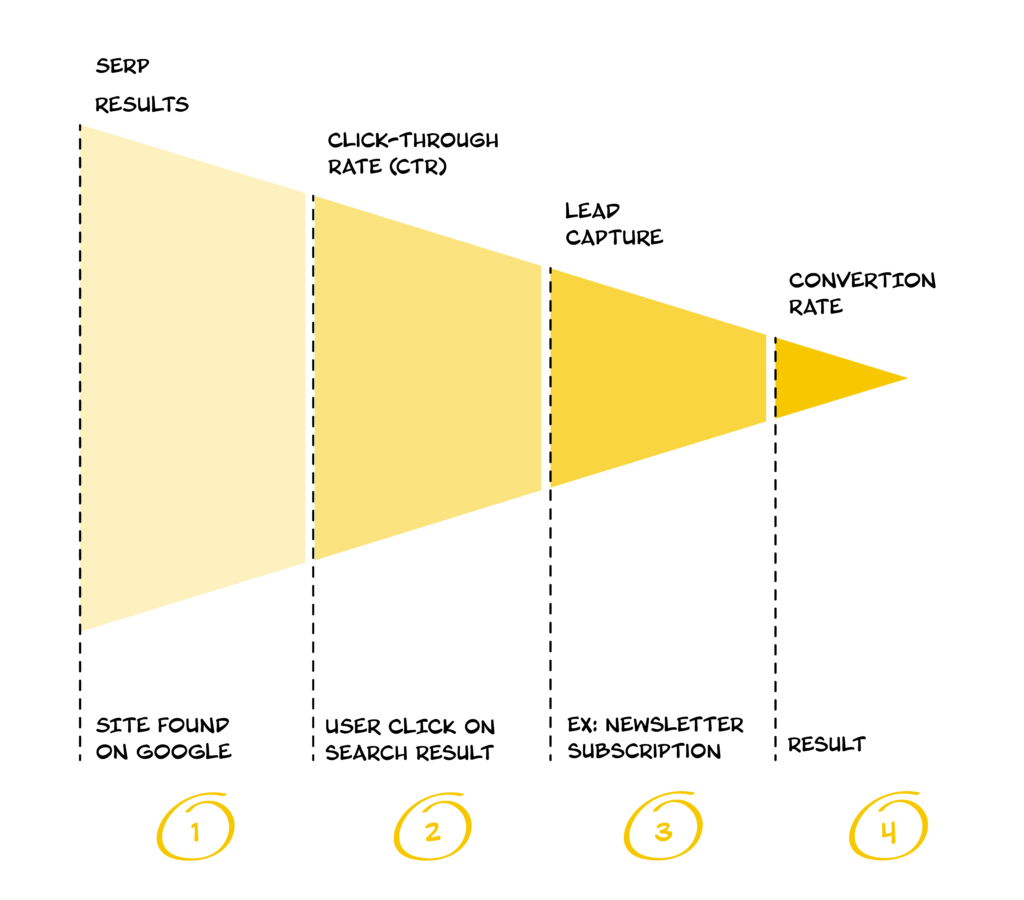
For a small business with a limited marketing budget, that difference matters enormously. Paid ads stop the moment your budget runs out. A well-optimised page keeps bringing in traffic for months or years after you publish it.
But SEO is not just about traffic. It is about trust. When your business appears at the top of search results, customers assume you are a credible, established option. They did not see an ad. They found you. That psychological shift affects how warm they are when they land on your page, and ultimately how likely they are to get in touch.
When you search on Google today, you no longer just get a list of blue links. Google might answer your question directly at the top of the page. It might show a map, reviews, video results, or a rich snippet with product details. All of these results link back to websites that presented the best answers. That is the game. And here is how to win it.
Step 1: Create Content for Quality, Not Quantity
Before getting into tactics, one principle needs to be clear: aim for quality, not quantity. Unless you sell ads on your website or run a megastore, be as specific and niche as possible.
There is a term for this approach: long-tail keywords. These are search phrases of three to five words that are more specific than a broad term like “plumber” or “accountant.” Long-tail keywords are easier to rank for, and they bring more qualified visitors to your website, which means better business results. Someone searching “emergency boiler repair Manchester” is far closer to calling you than someone searching “heating.”
Define Your Target Audience
While this article is about building an SEO strategy that pleases Google, you should always be thinking about your audience, not the algorithm.
When you create content with your audience in mind, your users will be satisfied, and Google will follow. To please your visitors, you first need to know who they are. Define a clear target audience for your site. Find out what challenges they face, what questions they are asking, and what would genuinely help them. Put yourself in their shoes when writing, and make every piece of content relevant to a real problem they have.
Create Original, Relevant Content
Make your content personal rather than generic. Not because Google penalises AI-generated filler, but because authentic content converts. If you create something that genuinely reflects your experience and speaks directly to your audience, they will read it, share it, and trust you enough to buy from you.
This is especially true for small businesses, where it is easier to build a relationship on a personal level. A local tradesperson who writes honestly about common mistakes homeowners make will earn more trust than a corporate blog that sounds like every other corporate blog.
Set a Goal for Each Article
Avoid writing without a purpose. Before you start, define what you want the reader to do after finishing the article. Do you want them to book a call? Subscribe to a newsletter? Request a quote?
Your call-to-action (CTA) should match the intent of the article. If the article explains something educational, pushing for an immediate sale will feel out of place. A better fit might be asking the reader to subscribe so you can send them follow-up tips. You start a conversation rather than rushing a transaction.
Step 2: How Does AI Impact SEO?
This is the question every small business owner needs to understand right now, because the answer changes what good SEO looks like in practice.
AI has entered the search experience in two distinct ways. First, AI tools like ChatGPT, Perplexity, and Google Gemini now give users direct answers to questions, bypassing traditional search results entirely for some queries. Second, Google itself has introduced AI Overviews, which appear at the very top of search results and summarise answers before showing any organic links.
Both of these changes affect how your content needs to be written and structured.
How Do AI Overviews Impact SEO?
Google’s AI Overviews are AI-generated answer boxes that appear above the traditional organic results for many search queries. Instead of showing ten links and letting the user decide which to click, Google now summarizes an answer directly on the results page.
The impact on click-through rates is real. When Google answers the question for the user without them needing to click, some searches that used to send traffic to your website no longer do.
But here is the part most people miss: AI Overviews also create a new form of visibility. Google’s AI pulls its answers from specific sources, and the websites it cites get mentioned inside the Overview itself. That mention can drive high-intent traffic, because the reader has already been warmed up by the summary and is clicking through to learn more from the original source.
To get cited in AI Overviews, your content needs to directly and concisely answer specific questions. Generic content fails here. A paragraph that clearly defines a term, explains how something works, and gives a concrete example is exactly the kind of content Google’s AI can extract and attribute. Vague statements and padded introductions get skipped entirely.
The practical shift is this: stop writing articles that are loosely “about” a topic. Start writing articles that answer specific questions with clear, structured responses. Use H2 and H3 headings written as questions. Add an FAQ section at the end of key articles. Make sure every section earns its place by answering one clear question.
Does SEO Still Matter If AI Is Answering Everything?
Yes, and here is why.
AI Overviews appear most often for informational queries: “how does X work,” “what is Y,” “what causes Z.” But commercial queries, where people are ready to hire someone or buy something, still return traditional search results far more often.
If someone searches “kitchen fitter Bristol” or “best CRM for small business,” they are not getting an AI essay. They are getting a map pack, a list of providers, and review snippets. Those results are still driven by traditional SEO signals.
The smart approach is to do both: structure your educational content to get cited in AI Overviews, and make sure your commercial pages are properly optimised for traditional rankings. They serve different stages of the buyer journey, and you want to show up at both.
Preparing for Generative Engine Optimization (GEO)
Generative Engine Optimization, or GEO, is the emerging practice of structuring content so that AI-powered search engines can use it accurately in their responses.
Focus on creating detailed, well-structured content that AI models can parse easily. Use schema markup to provide clear context and relationships between data points on your site. Write content that answers questions naturally, using the kind of phrasing people actually use when speaking to voice assistants or AI tools. Keep your business information up to date, because AI systems pull from live data, and outdated details will undermine your visibility in AI-generated results.
Step 3: Does Video Impact SEO?
Video is no longer just a nice-to-have for your marketing. It is now a direct SEO signal, and for small businesses willing to use it, it represents one of the clearest competitive advantages available today.
Google Surfaces Video Results Directly in Search
For many search queries, Google now shows a video carousel alongside or above traditional organic results. Optimised YouTube videos can appear in these carousels for queries that have nothing to do with YouTube specifically.
What this means in practice: a small business that creates a well-titled YouTube video answering a common customer question can appear twice on the same search results page. Once in the video carousel, and once in the organic listings below. That double presence is difficult to achieve with text content alone.
Video Increases Time on Page
One of the signals Google uses to evaluate whether a page is useful is how long visitors spend on it. A page where users read for 30 seconds and leave is being judged differently than one where they stay for four minutes.
Embedding a relevant video on a key page of your website increases average time on page significantly. Visitors watch the video, they stay longer, and Google interprets that as a sign that the page is genuinely useful. That signal feeds into your rankings over time.
How to Optimise Videos for SEO
The basics matter more than most people realise.
Give your video a title that matches what people actually search for, not a creative internal name. “How We Install Cavity Wall Insulation” is more useful to Google than “The Cozy Home Process.” Write a detailed description that includes the terms your customers use. Add chapters or timestamps so viewers can jump to the part they need. Include a transcript or closed captions, both for accessibility and because Google can index the text.
If video feels like a big production, start small. A two-minute recording explaining something customers ask about repeatedly is more valuable than a polished video that never gets made. Consistent uploads over time and real viewer engagement, through comments and watch time, help your channel grow in authority and carry that back to your website.
Step 4: Enhancing Your Click-Through Rate in Search Results
As we saw by now, driving traffic to your website is only the first step. Converting visitors into customers is the ultimate goal. Here’s how SEO can influence conversion rates:
Delivering Relevant Content
Align your content with user intent. If your target audience is searching for solutions, provide actionable advice and answers.
Enhancing User Experience (UX)
Optimize website speed, mobile responsiveness, and navigation to ensure visitors have a seamless experience.
Reduce bounce rates by making information easy to find.
Optimizing Call-to-Actions (CTAs)
Place clear and compelling CTAs strategically throughout your site to guide users toward your desired action. Remember not all CTAs must direct the users to the purchase decision. Some visitors might just want to subscribe a newsletter to keep in touch with your business, others might want to book a call before making a purchase decision. Test these options and optimize the conversion rates on these CTAs.
Building Trust with SEO Signals
Build backlinks from reputable sources to build credibility. A great piece of content can go a long way to make others link to your site, but there are other ways to get links to your site – use with caution.
Use HTTPS for secure browsing and display customer reviews prominently.
Step 5: Do Not Try to Sell Too Fast
Most visitors will not buy anything on their first visit to your website. That is simply how purchasing decisions work. But that does not mean you cannot start a conversation.
Many websites push visitors toward a purchase immediately, like a salesperson who leads with a pitch before saying hello. A smarter approach is to offer something genuinely useful first: a helpful article, a free guide, an honest answer to a common question. If visitors find that valuable, they might subscribe to your newsletter or book a free call.
This is called lead nurturing in marketing terms. It is the process of building a relationship with potential customers over time, providing value at each step, until they are ready to buy. A newsletter subscription is free and cancellable. It is a low-commitment way for a prospect to stay connected with your business without feeling pressured.
Think of it like a conversation rather than a transaction. If a friend asks for advice, you give it freely. You do not immediately hand them an invoice. You say, “Call me if you need anything.” That is what good content does: it builds trust, keeps the door open, and puts you at the top of the list when they are ready to act.
Step 6: Converting Visitors into Customers
Driving traffic to your website is only the first step. The goal is to turn visitors into clients.
Align Content With What the Visitor Actually Wants
Match your content to the intent behind the search query. Someone searching “how to fix a leaking radiator” wants a solution, not a sales pitch. Someone searching “plumber in Leeds” is ready to hire. Give each type of visitor what they are actually looking for.
Make the Experience Fast and Simple
Optimise your website speed, mobile responsiveness, and navigation. Visitors who cannot find what they need within a few seconds leave, and a high bounce rate signals to Google that your page failed the query. Use Google PageSpeed Insights to check your scores and prioritise mobile performance, because that is where most of your traffic is coming from.
Place CTAs Strategically
Not every call-to-action needs to push the visitor toward a purchase. Some might want to subscribe to a newsletter, book a free consultation, or download a resource. Test different CTAs across different pages and track which ones convert. Align the ask with where the visitor is in their decision-making process.
Build Credibility With Backlinks and Reviews
Backlinks, meaning links from other websites pointing to yours, are one of the strongest trust signals in SEO. A great piece of content earns links naturally when other sites find it worth referencing. Customer reviews displayed prominently on your site, and on your Google Business Profile, also build the kind of social proof that turns sceptical visitors into buyers.
Step 7: Test, Measure, and Improve
Continuous testing is what separates businesses that grow with SEO from businesses that plateau.
Use Google Search Console to identify pages with high impressions but low CTR. These are pages that rank well but fail to attract clicks. Test different title tags and meta descriptions to see what changes behaviour.
Use Google Analytics to monitor time on page, bounce rate, and conversion paths. Pages where visitors stay longer and take action are working. Pages with high exit rates and no conversions need attention.
When testing, change one element at a time: a headline, a CTA, a layout. Measure the result, then move to the next variable. Changing everything at once tells you nothing about what actually worked.
The Strategic Benefits of SEO for Small Businesses
When done well, SEO does more than bring in website traffic. It builds the kind of long-term digital presence that larger competitors cannot easily undercut with a bigger ad budget.
A strong SEO strategy increases your brand visibility and authority in your industry. It drives high-quality, qualified traffic to your website from people who are already looking for what you sell. It improves user engagement and satisfaction by making your site genuinely useful. It builds and nurtures relationships with potential customers over time. And it generates a return on investment that compounds as your content library grows.
SEO is not a one-time task. It is an ongoing process of refinement. But for small businesses, that ongoing effort is also the opportunity: most of your competitors are not doing it well. Quality content, smart use of video, and a strategy that accounts for how AI now shapes search results are all edges available to you right now.
The businesses getting outsized results from search are not necessarily the ones with the biggest budgets. They are the ones that show up with the most relevant, useful, well-structured answer when a potential customer types a question into Google.
That is the entire game!